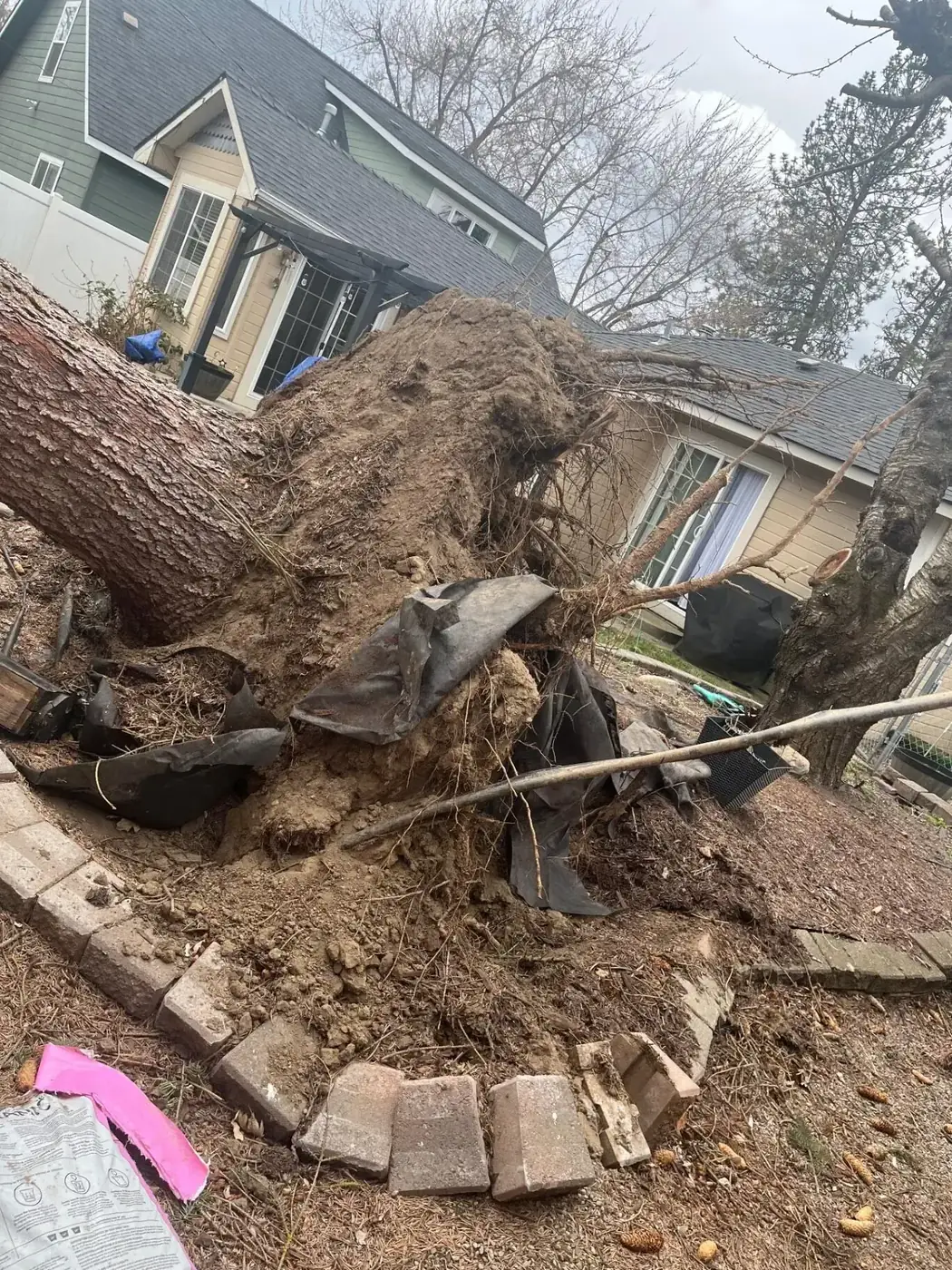
Uprooted dangerous tree that fell near a Spokane home

Homeowner's Guide

How to Spot a Dangerous Tree Before It Falls

Not sure if that tree in your yard is safe? Here are the warning signs Spokane arborists look for — and what to do if you see them.

6 Warning Signs Your Tree Is Hazardous

Every year in Spokane, trees come down on homes, cars, fences, and power lines — and in almost every case, the warning signs were there for weeks or months before the failure. Knowing what to look for can save you thousands in damage, or even save a life.

Here are the six most common signs that a tree on your property needs professional attention — straight from the climbers who remove them every day.

1.Leaning Trunk

A tree that's suddenly started leaning — or one that leans more than 15 degrees — is showing signs of root failure. If it's leaning toward your home, garage, fence, or power lines, it could come down without warning. A slow lean is often more dangerous than a sudden one because the roots have been quietly decaying for months or years.

👉 If a tree on your property is leaning toward any structure, call us for a free assessment before it's too late.

2.Cracks & Splits in the Trunk

Deep vertical cracks, seams that are opening, or splits where major branches meet the trunk are structural failures waiting to happen. These weak points allow wind, ice, and snow to finish what gravity started. A trunk with a visible crack running through it can snap in half during a moderate windstorm.

👉 Don't wait for the next storm. A cracked trunk is a ticking time bomb.

3.Fungus, Mushrooms & Rot

Mushrooms growing at the base of a tree or along the trunk are a dead giveaway of internal decay. The wood inside is rotting — the tree may look healthy from the outside but is hollow and structurally compromised. Conks (shelf fungus), bracket fungi, and large mushroom clusters all indicate serious problems.

👉 If you see fungus, the damage is already done inside. Get a professional to assess how far the rot has spread.

4.Dead Branches & Crown Dieback

Dead branches (also called "widow-makers") can fall at any time — a calm day, a light breeze, or under the weight of morning dew. If you see large dead limbs in the upper canopy, or if the top of the tree has no leaves while the rest does, the tree is dying from the top down. This often signals root disease or trunk decay.

👉 Dead branches over walkways, driveways, or play areas are an immediate hazard.

5.Heaving Roots & Soil Changes

If you notice the ground lifting or cracking on one side of a tree, the roots are pulling out. This is especially common after heavy rain or prolonged wet seasons. Look for exposed roots, soil mounding, or a gap between the trunk base and the ground on one side — all signs the tree is losing its anchor.

👉 Root failure = total tree failure. If roots are heaving, call immediately.

6.Storm Damage & Hanging Limbs

After a storm, look up. Broken branches caught in the canopy ("hangers") are unpredictable and can fall days or weeks later. Split forks, partially uprooted trees, and limbs resting on power lines are all emergencies that need professional removal — not a DIY ladder job.

👉 Never try to remove storm-damaged limbs yourself, especially near power lines.

See Any of These Signs?

Don't wait for the next storm to find out if your tree is safe. We offer free on-site assessments — no obligation, no pressure. Just honest advice from experienced climbers.

MORE FROM SPOKANE HAZARDOUS TREE REMOVAL

Request a Spokane Tree Removal Estimate

That Tree Isn't Going to Remove Itself

You've been looking at it for weeks. Maybe months. You know it's dangerous. You know it could come down on your house, your car, your family. So stop waiting and call us.

We'll drive out, look at the tree, and give you an honest price. No pressure, no upselling, no "well it depends" runaround. Just a straight answer from an experienced Spokane hazardous-removal crew.

(509) 204-4333Text a Photo for Fast Quote

Call or text to discuss the hazard • Scheduling depends on safety, weather, location and availability

What's Near the Tree? (check all that apply)
How Soon? (optional)

Or just call us: (509) 204-4333 — it's faster.

Have photos of the tree? Text them to (509) 204-4333 and we can often quote it without a site visit.