Arborist climbing a hazardous dead tree in Spokane WA

Spokane's Hazardous Tree Experts

Hazardous Tree Removal in Spokane, WA

Hazardous tree removal planned around the tree, access, nearby structures, and site conditions across Spokane and North Idaho.

Hazardous Tree Removal — On-Site Estimate

Got a Hazardous Tree? Request an On-Site Estimate.

Dead, leaning, or storm-damaged tree near your home? Share your name, number and tree details so we can discuss the site and current scheduling.

Pricing follows an on-site look at the tree, access and what is underneath.

Why Hazardous Trees Can't Wait

A hazardous tree isn't just an eyesore — it's a liability. Every day a compromised tree stays standing, it threatens your roof, your power lines, your vehicles, and your family's safety. In Spokane's harsh winters and wind-prone seasons, weakened trees can fail catastrophically and without warning.

We focus on dangerous tree removal where tree condition, limited access and nearby structures require a site-specific plan. A dead tree near a home or a leaning pine beside a fence may require controlled sectioning and rigging when conditions allow.

The written estimate defines the removal plan and available options. Cleanup, hauling, and stump work depend on the written estimate and selected options. Controlled rigging is planned around nearby structures, fences, and landscaping.

Leaning Tree Removal

Trees leaning toward your home, garage, or fence are ticking time bombs. We remove leaning trees safely — even in tight spaces — before gravity takes over.

Dead Tree Removal

Dead trees lose structural integrity fast. Branches snap without warning, and root decay can topple an entire trunk overnight. We take them down before they come down on their own.

Dangerous Tree Removal

Cracked trunks, hollow cores, fungal rot, storm-weakened roots — if a tree looks wrong, it probably is. We assess and remove dangerous trees, scheduling based on safety and crew availability.

Site-Specific Removal Plan

Registered Washington business (UBI 606 143 570). Each removal is planned around the tree, access, nearby structures, and what is underneath.

MORE FROM SPOKANE HAZARDOUS TREE REMOVAL

OUR HAZARDOUS TREE REMOVAL PROCESS

Removing a dangerous tree isn't a one-step job — it requires careful decisions about the tree, access, nearby structures, and the controlled-removal plan.

01

On-Site Assessment

The on-site review considers trunk condition, lean, visible root movement, nearby structures, access, and overhead utility lines. These conditions help determine whether removal is appropriate and how the work can be controlled.

02

Rigging Plan & Equipment Selection

The removal approach depends on the tree's condition, access, drop zone, and what is beneath it. The cutting and lowering sequence is planned around the site before work begins.

03

Controlled Limb-by-Limb Removal

Hazardous trees near structures may need to be dismantled in controlled sections rather than felled whole. Pieces can be lowered within the planned work zone to reduce exposure to nearby property.

04

Trunk Sectioning & Ground Work

Once the canopy is removed, the trunk can be taken down in measured sections. Cleanup, hauling, and stump work depend on the written estimate and selected options.

05

Cleanup & Stump Options

The written estimate identifies what will be chipped, hauled, stacked, or left on site. Stump work is included only when listed as a selected option.

What Makes a Tree 'Hazardous' in Spokane?

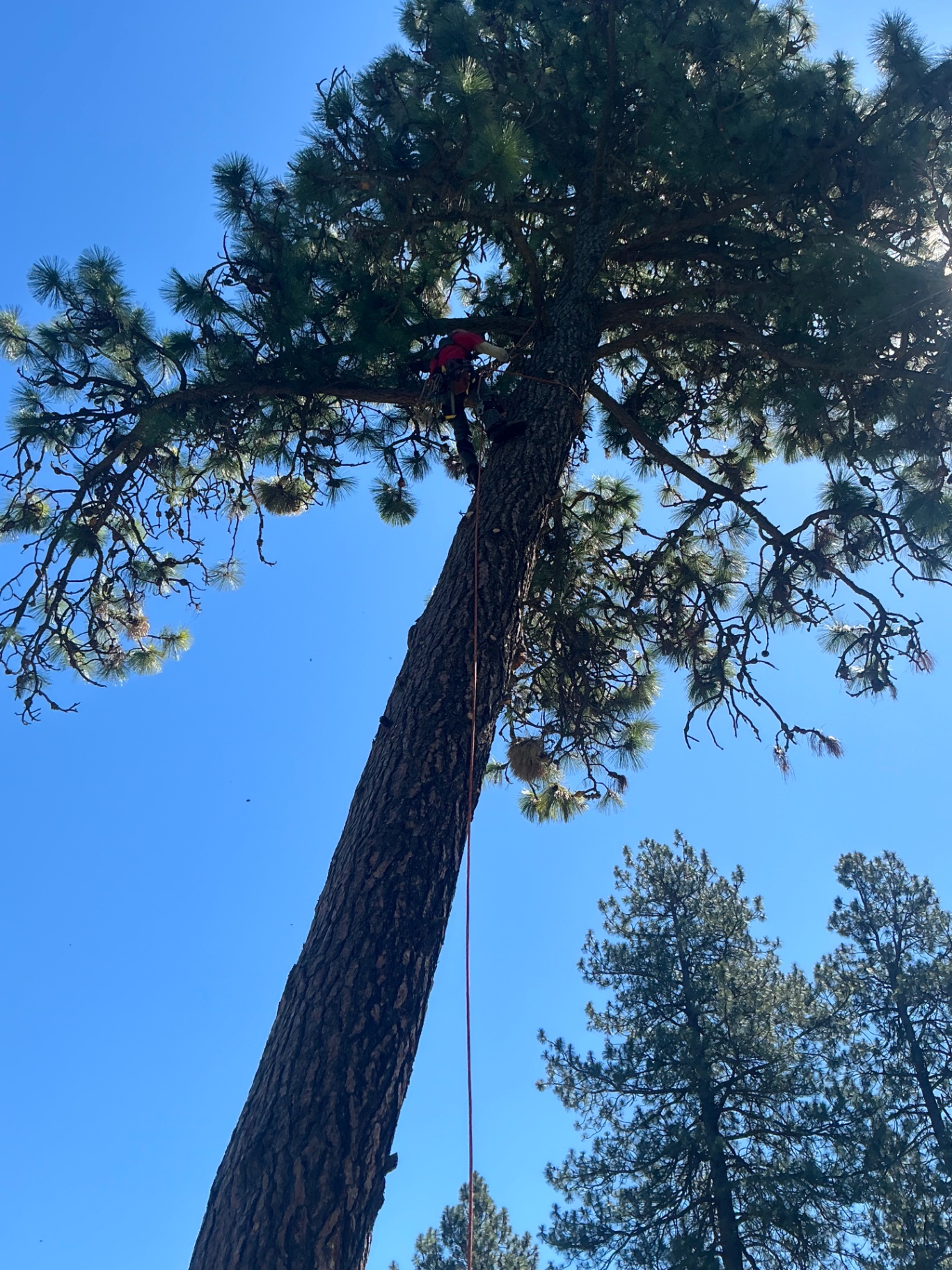
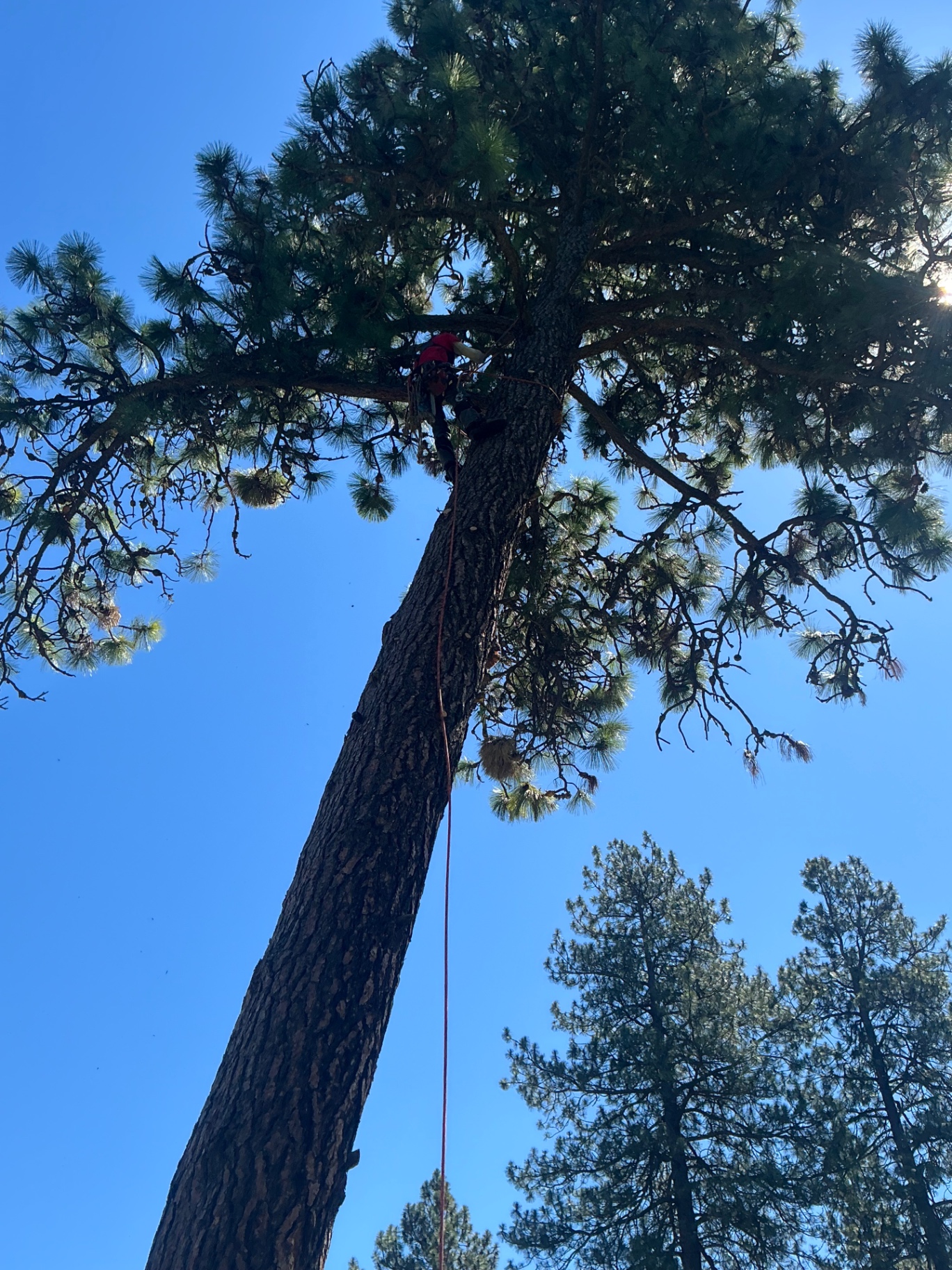
A hazardous tree isn't necessarily a sick tree — it's any tree whose failure could cause significant damage or injury. In Spokane's specific climate, the most common hazard categories are: drought-stressed ponderosa pine (compromised root systems and brittle wood), wind-damaged Douglas fir (visible cracks, hung limbs, partial trunk failure), beetle-killed conifers (structurally degrading every week), and aging silver maples and cottonwoods with hollow trunks. The 2015 windstorm and every major storm since has reinforced one lesson: trees fail under loads they handled fine for decades, because internal decay accumulates invisibly.
When Is Removal the Only Option?

Removal may be considered when the trunk has visible cracks or splits, much of the canopy is dead, the root plate is lifting, soil is heaving around the base, fungal conks are present, or a tree has a progressive lean toward a structure. If you see these signs, request an on-site estimate to discuss the tree and site conditions.

Why Tight-Access Work Is Our Specialty

Fenced backyards, narrow side yards, hillsides, and trees close to structures can limit access and usable drop zones. Technical removal may include climbing, controlled lowering, and section-by-section dismantling when site conditions call for it.

Clear Scope and Site Planning

The tree, access, drop zone, and nearby structures are reviewed before the removal approach is set. The written estimate identifies the removal scope and selected cleanup, hauling, and stump options.

FREQUENTLY ASKED QUESTIONS

Real answers to the questions Spokane homeowners ask most.

Spokane Hazardous Tree Removal focuses on technical removals near structures and in difficult-access areas. Call (509) 204-4333 to discuss the hazard; scheduling depends on safety, weather, location, and availability.

Call (509) 204-4333

From The Field

Real Spokane Removals — Real Climbers

Real climbing and rigging work from hazardous removals in Spokane and North Idaho, including technical work near structures and in difficult-access areas.

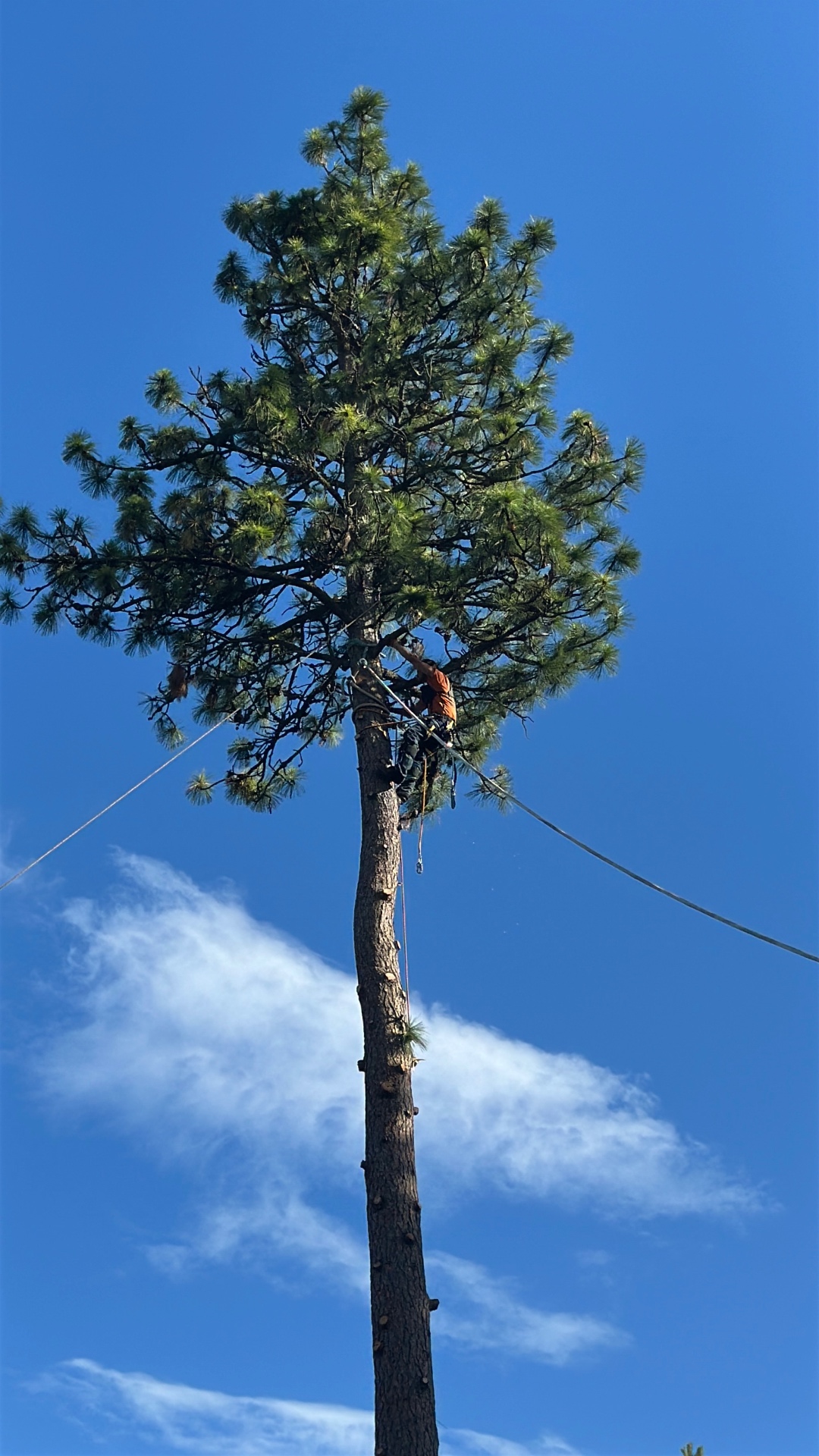
Spokane arborist climbing a tall ponderosa pine to perform a hazardous tree removal
Setting the top — ponderosa pine, Spokane
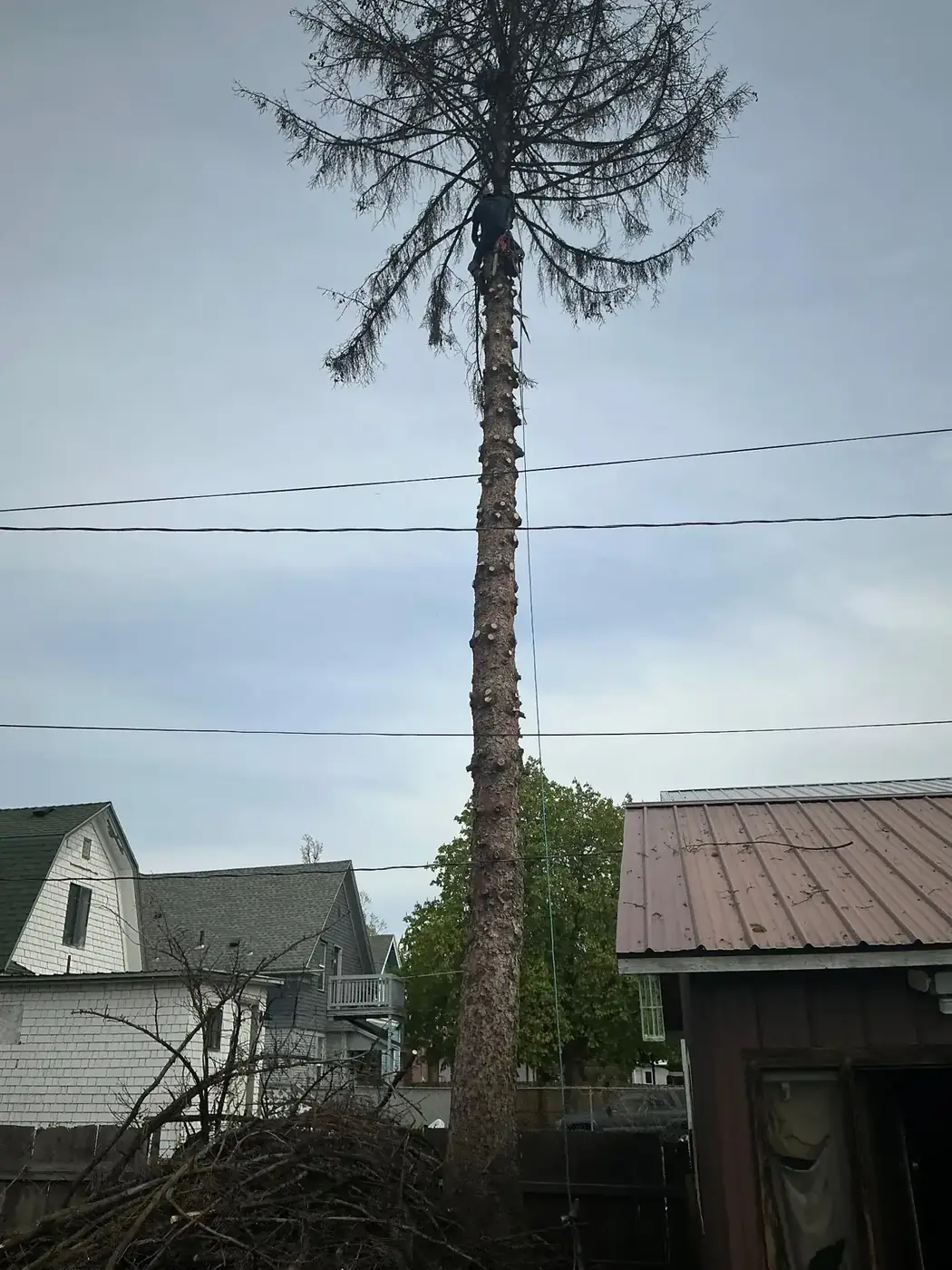
Climber rigging down a large ponderosa pine in Spokane WA
Rigging the canopy down piece by piece
Tree climber roped into the crown of a hazardous pine on a clear day
Topping out, bluebird day in Spokane
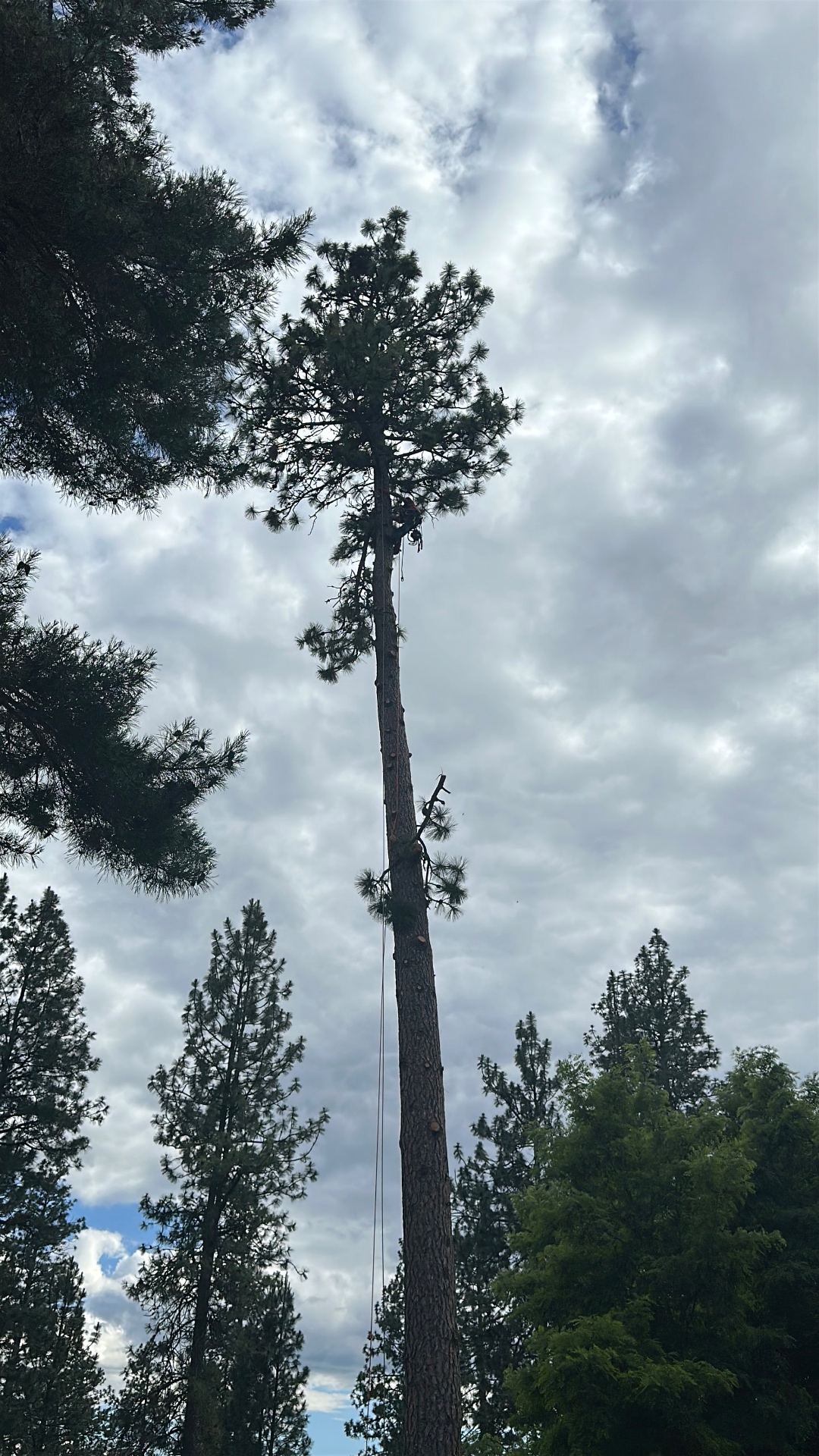
Arborist topping a tall ponderosa pine against a stormy Spokane sky
Storm-day removal — leaning ponderosa

Request a Spokane Tree Removal Estimate

That Tree Isn't Going to Remove Itself

Large, dead, leaning, split, storm-damaged and difficult-access trees need a clear look at the tree, access and what is underneath.

Photos help us review the tree, access and nearby structures before the on-site estimate.

Clear work scope
Removal and cleanup options in writing.
Technical removals
Hazardous and difficult-access trees.
Local service
Spokane and nearby North Idaho.
Urgency

Current photos help determine urgency and complexity and can speed up estimating.

Pricing follows an on-site look at the tree, access and what is underneath.